

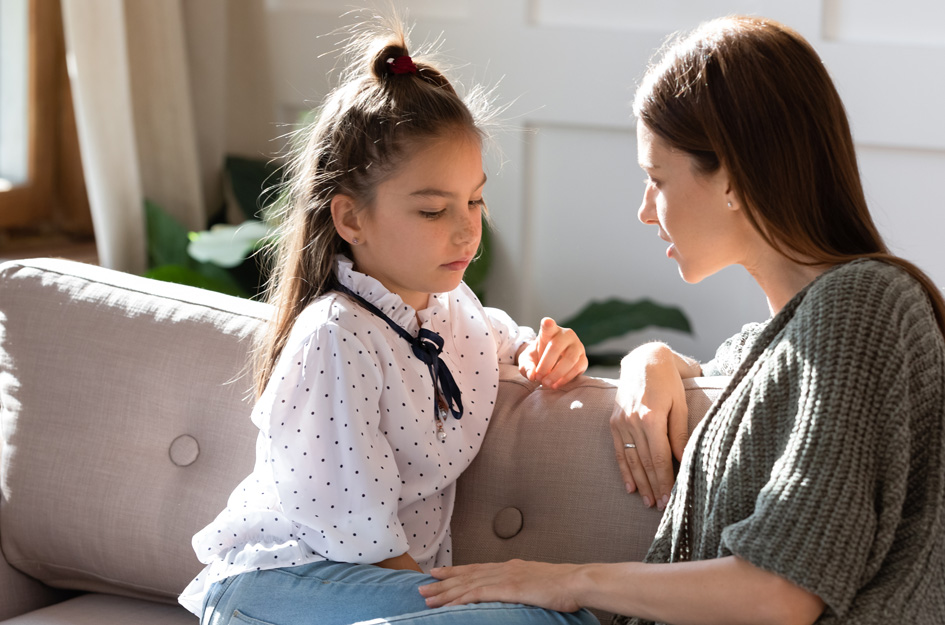
How to Talk to Children About School Shootings: Guidance for Parents
When school shootings are in the news, it can be hard to figure out how to talk about them with your child. But ignoring these incidents is not an option, especially as school shootings have become increasingly more common.
School shootings can have a deep impact on the mental health of youth – both those who are directly exposed to the incidents, and those who experience it through the news, social media, online video and through school shooter drills, now common at many schools. The latter is known as secondary trauma, when young people who have exposure to images or stories about a traumatic event experience heightened stress, irritability and sadness.
While we sometimes have the impulse to avoid talking about topics that are difficult or sensitive, doing so leaves your child to process these complex issues on their own and opens them up to confusion and false narratives.
Intentional, supportive dialogue with young people can help them navigate the many emotions and worries these events stir up. Creating a safe space for reflection and questions will empower your child to build critical life skills related to problem-solving, emotion management, resilience and self-control.
How to Talk to Children About School Shootings
Parents, caregivers and families are often the frontline of safety for young people. That’s why it’s important for families to be ready to have conversations around safety and managing emotions during times of crisis. Here are some ways to initiate conversations with your kid about school shootings:
Address the Incident Directly
Let your kid or teen that you are aware of the incident and that you understand it may be on their mind as well, and that you’re here to support them. Don’t assume they’ll come to you to strike up conversation. Instead, start an open dialogue by asking them direct questions such as:
- “Tell me what you’ve heard about [the incident]?”
- “What do you know about [the incident] that took place this week?”
- “What have you seen or heard about [the incident] on the news or on social media?”
Show Willingness to Answer Questions
It is important for kids and teens to know that you are here to support them and that they view you as a resource. Make sure to show willingness to talk and answer questions about the incident by saying things such as:
- “Do you have any questions about what happened?”
- “I am here to talk and answer any questions you may have about [the incident].”
- “I know that this is upsetting, so please know that I am here to answer any questions or concerns you have about [the incident].”
Validate and Listen to Feelings
Ask your child to share their feelings about the incident and respond with empathy. It is also important to validate their feelings, and not tell them how they should feel or assume you know how they feel. Here are some helpful prompts:
- “It sounds like you are feeling [sad/upset/scared] about this [incident].”
- “Do you feel safe at school and in our community? What is it that you’re worried about?”
Acknowledge and validate their responses and try not to answer with throwaway statements such as “You are going to be fine” or “I know how you feel,” which can discount their feelings and shut down the conversation. By listening to their feelings and giving them space, you can create a safe environment for your child to bring up their emotions, knowing you’ll always hear them out, no matter what.
Find Ways to Reconnect to Community
With their sense of safety rocked, young people may feel worried or fearful about the world around them. It’s important to find ways to reconnect to community, whether it’s through grieving the incident together, working on related projects or solutions, or tapping back into the power of social connection.
Based on your child’s age and development, some ideas might include:
- Maintaining routines and ensuring younger children especially get ample opportunity for play and self-expression.
- If the incident was local, attending vigils or other moments of togetherness and mourning.
- Older youth may wish to join school, Boys & Girls Club or community efforts to discuss solutions or projects to improve the community.
In addition to this guidance, there are a variety of services and organizations to support young people and their families during times of crisis. Click here to find numbers to call or text to receive additional support.
Sign Up for Parent Resources
Boys & Girls Clubs of America supports young people and communities year-round through safe and inclusive places, caring mentors and life-enhancing programs. Find a Boys & Girls Club near you or sign up for our newsletter to receive parent resources and youth stories.


