

Building Tomorrow’s Workforce Today: How Corporate Support Cultivates a Future-Ready Talent Pipeline
Today’s workforce is changing faster than ever. Automation, AI, and global shifts are redefining what it means to be “career ready.” According to the World Economic Forum, 22% of all jobs are expected to fundamentally change by 2030. This evolution presents both a challenge and an opportunity — especially for young people entering the workforce for the first time.
The U.S. teen labor market reflects this shift. Earlier this year, Challenger, Gray & Christmas reported that teens would gain only one million jobs during the summer months, the lowest number since 2010. That matters because early job experiences are more than a paycheck; they are a gateway. Research from the Brookings Institution shows that holding a job between the ages of 16 and 18 is a predictor of higher job quality later in life. When teens miss these early work experiences, it delays the development of confidence, accountability, and competencies that lead to upward mobility.
Preparing young people for the future economy is developed through consistent support in classrooms, after-school programs, and communities. Employers increasingly value digital fluency, critical thinking, adaptability, and emotional intelligence. Work-based learning programs, like internships and apprenticeships, are among the most effective ways to build these competencies and connect learning to opportunity.
For corporations, investing in youth development is not just social responsibility — it is business and talent strategy. The youth of today are the talent of tomorrow. When companies engage early by providing mentorship, training, and real-world experiences, they help close the growing gap between what the economy demands and what young people are equipped to provide.
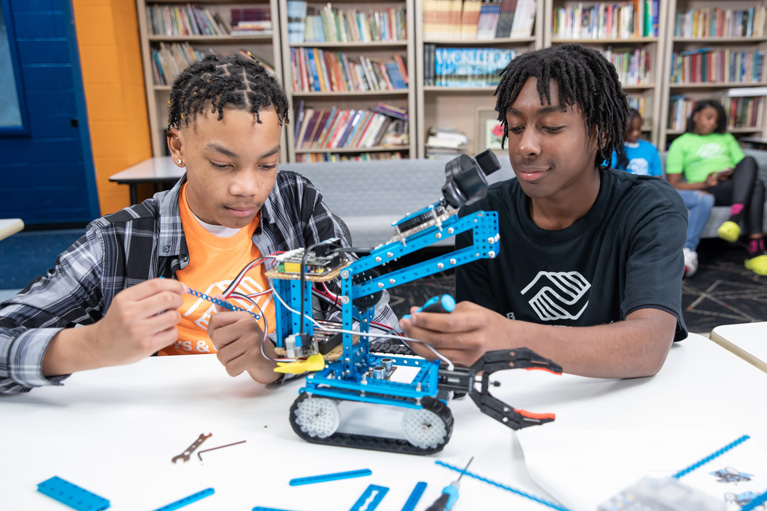
At Boys & Girls Clubs of America, we see the same impact. Across more than 5,500 Clubs, kids and teens are gaining career exposure and essential skills through our partnerships with companies like Toyota Motor Corporation, The Coca-Cola Company, NASCAR , the Charles Schwab Foundation, Comcast Corporation, Jimmy John’s Franchise, and more.
Consider how these partnerships translate into possibility. Research from Gallup and Walton Family Foundation shows that less than 30% of high school students feel ‘very prepared’ for the postsecondary schooling or career options available to them. Today, 86% of Club kids say they know what career they want to work toward and 88% of Club teens feel prepared to get a job. One teen gained her first work experience through our Old Navy partnership that connects Club members to local job placements. These are not isolated stories. For many young people, these are the first steps toward a family-sustaining career.
This work benefits more than youth. It strengthens businesses, communities, and the economy at large. In fact, every $1 invested in Boys & Girls Clubs returns an average of $10.32 in community benefits, like better health outcomes, and improved graduation and employment rates.
The question is no longer whether to invest in workforce readiness, but how to scale what works. When youth-serving organizations, schools, and employers collaborate, they can deliver meaningful work-based learning, mentorship, and exposure that sets young people on a path to success.
Investing in young people today, through apprenticeships, training programs, and those critical first jobs, lays the foundation of the America of tomorrow. Every opportunity we create helps unlock potential, build confidence, and strengthen communities. That’s why we say: America Needs Club Kids and Club Kids Need You. Together, we can ensure the next generation has the tools and support they need to thrive.


