

Five Fun STEM Activities for Kids
Curiosity begins with one question — “Why?” — and for many kids, that simple question can spark a lifelong love of learning.
That natural curiosity is what STEM learning (science, technology, engineering and math) is all about. STEM teaches problem-solving, critical thinking and creativity — skills that open doors to opportunity and some of the fastest-growing careers.
To help families, educators and Club staff nurture that curiosity, Boys & Girls Clubs of America is sharing five fun, easy-to-try STEM activities for kids that can be done anywhere — at home, in the classroom or at the Club.
“Early exposure to STEM prompts curiosity and builds students’ confidence to persevere through challenges,” shares Jennifer Batemen, Senior Vice President, Youth Development, Boys & Girls Clubs of America. “The earlier we connect them with hands-on STEM learning and role models from all backgrounds, the greater chance we have of building a STEM workforce that reflects our society.”
That sense of discovery doesn’t just change a child’s perspective — it strengthens our shared future. Through our partnership with Thermo Fisher Scientific, Boys & Girls Clubs of America is preparing the next generation of innovators — helping every child see that their curiosity and creativity are what our nation needs most. Because America needs Club kids who are ready to innovate, explore and lead the way forward.
Why STEM Learning Matters for Every Child
STEM learning helps kids make sense of the world — and their role in shaping it. Whether coding a simple robot, mixing a chemical reaction or building a bridge from everyday materials, these experiences foster creativity, collaboration and critical thinking.
At more than 5,500 Boys & Girls Clubs across the country, that spark is already igniting: three-quarters (77%) of Club Kids say they’re eager to learn more about science, computers or technology.1
But there’s still work to do. According to the U.S. Bureau of Labor Statistics, jobs in science, technology, engineering and math are expected to grow nearly three times as fast as other careers — yet many children, especially girls and youth from underrepresented communities, don’t see themselves in those roles.2
“Hands-on activities bring STEM to life,” says Meron Mathias, Vice President of Corporate Social Responsibility & Sustainability at Thermo Fisher Scientific. “Students can read about STEM concepts, but when they can build, test and experiment, those abstract ideas suddenly become real. They experience the power of curiosity and the thrill of discovery — and start to see themselves as problem-solvers.”
That’s why BGCA’s partnership with Thermo Fisher Scientific focuses on inclusive, hands-on STEM programs that make science fun, exciting and accessible for every child.
Five Fun STEM Activities for Kids
These activities, all sponsored by Thermo Fisher Scientific, come from BGCA’s MyFuture online learning platform for kids. These STEM learning projects are perfect for families and educators looking for simple ways to inspire learning through play.

Slime Challenge
What better way to make STEM activities for kids exciting than with slime? This hands-on chemistry experiment explores polymers — long molecular chains that give slime its stretch. Kids will learn how chemical reactions work while enjoying a fun, sensory experience. It’s a great example of hands-on science that feels more like play than learning.
You’ll Need:
- Glue
- Baking soda
- Contact solution
- Cornstarch
- Water
- Bowls & measuring spoons
- Yardstick or measuring tape
- Optional mix-ins (food coloring, glitter)
Here’s a great starting recipe for making slime:
- 1 bottle (or 4 ounces) of glue
- 1⁄2 teaspoon of baking soda
- 2 tablespoons of contact solution
Follow these instructions:
Mix the above ingredients in a bowl, then divide your slime among smaller bowls. From there, decide if you want your slime to be bouncy or stretchy. For stretchy slime, add water (up to 1⁄2 cup). For bouncy slime, add gradual amounts of water and cornstarch.
When you’re ready, test your slime! For stretchy slime, stretch your slime as far as you can without it breaking. Use a yardstick or measuring tape to measure the length of your slime. For bouncy slime, choose a test location (on a table or near a wall). Bounce your slime and measure the height it reaches using a yardstick or measuring tape. Don’t forget to write down your results so next time you’ll be able to make the perfect slime. You can even compare your results with your friends’ results by creating a chart or graph.

Make It Rain
Turn a jar, food coloring, shaving cream and water into a mini weather lab! This kitchen science experiment helps kids visualize condensation and the water cycle, showing how clouds form and rain falls. It’s an ideal weather STEM activity for classrooms or home learning and a simple way to connect science to the real world.

Art Create a Spinning Device for Making Art
Create a spinning art machine using a motor, batteries and a paper plate! Kids will explore motion, energy and art while learning coding logic and basic robotics concepts. It’s a simple but powerful STEAM project for kids that blends engineering and creativity — perfect for all ages and skill levels.

Extract DNA from a Strawberry
Science gets exciting when kids can see the building blocks of life with their own eyes. This biology experiment uses strawberries, dish soap, rubbing alcohol and other supplies to extract visible strands of DNA. It’s one of the most fascinating STEM activities for youth, introducing real-world lab science and connecting to future STEM careers in biotechnology.

Build a Wind-Powered Vehicle
Using household items, encourage kids to use their problem-solving skills to build a wind-powered car. This renewable energy experiment teaches motion, force and sustainability, making it a fun, eco-friendlier way to learn physics. Prompt kids to think like engineers as they tweak their designs to make their car go faster or farther!
Opening Doors through STEM
The demand for science, technology, engineering and math talent continues to grow — but access to quality STEM education for all kids continues to lag. That’s why Thermo Fisher Scientific and Boys & Girls Clubs of America are working together to close the gap.
For nearly a decade, Thermo Fisher Scientific has partnered with BGCA to help nurture a 21st-Century STEM workforce that reflects our society and has the skills to solve the world’s most complex challenges.
“When we broaden access to high-quality STEM learning experiences to students of all backgrounds, we build a more inclusive, innovative future for all,” says Mathias. “By making STEM fun, accessible and engaging, we’re showing every student that they belong and that their unique perspectives can help change the world.”
Through this partnership, more youth are gaining access to hands-on STEM education outside the classroom. Together, Thermo Fisher Scientific and BGCA are expanding opportunities for kids to learn through DIY STEM programs, which teach everyday science concepts through fun, interactive activities.
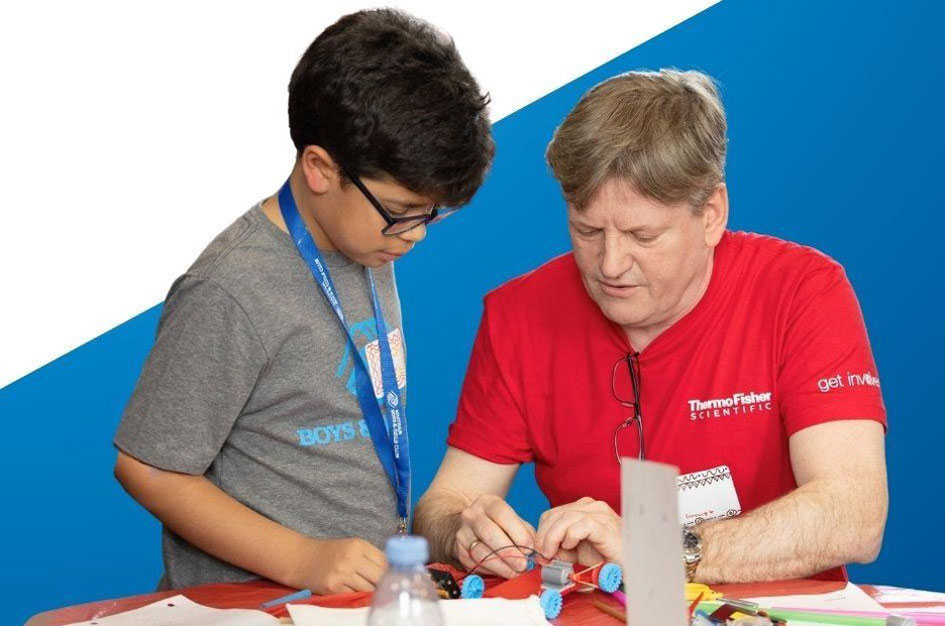
“Hands-on activities are a great way to engage our employees in this partnership and our commitment to broadening access,” says Mathias. “Thermo Fisher volunteers conduct DIY STEM activities with youth at their local Club, and they also host youth for STEM events at our sites nationwide throughout the year.”
Curiosity Starts Here
At Boys & Girls Clubs, hands-on STEM learning turns curiosity into confidence. Whether they’re building, coding or experimenting, these activities help kids develop creativity, collaboration and problem-solving — the skills that drive tomorrow’s breakthroughs.
That confidence is already growing: 66% of Club youth say they know the steps they need to take to have a STEM career.1 With support from Thermo Fisher Scientific, we’re helping more young people step into the world of STEM — because the next generation of innovators, explorers and leaders is already here.
Ready to inspire curiosity at home?
Download our free 5 Easy STEM Experiments for Kids Toolkit, filled with hands-on science experiments and challenges from Boys & Girls Clubs of America and Thermo Fisher Scientific.
Sources
1Boys & Girls Clubs of America, Youth Right Now – www.bgca.org/youthrightnow
2U.S. Bureau of Labor Statistics: Beyond the Numbers: Employment and wages for alternate definitions of science, technology, engineering, and mathematics (STEM) occupations – https://www.bls.gov/opub/btn/volume-14/stem-alternate-definitions.htm
3Gallup and Walton Family Foundation, Voices of Gen Z: Perspectives on STEM Education and Careers (2023), https://www.waltonfamilyfoundation.org/about-us/newsroom/majority-of-gen-z-interested-in-stem-but-schools-struggle-to-provide-adequate-support


