

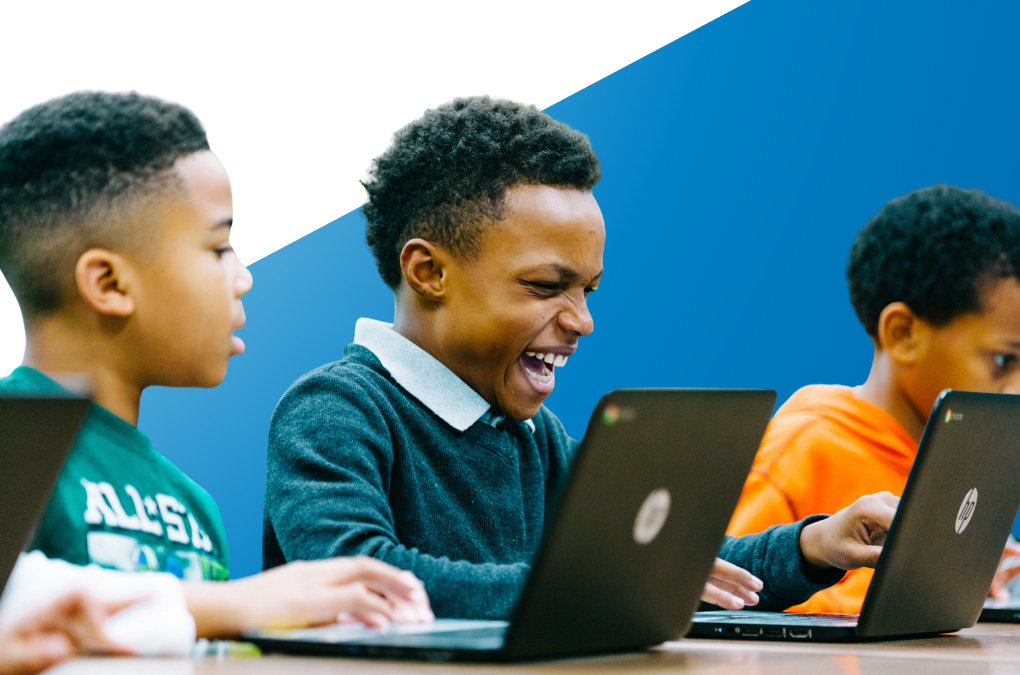
Bridging the Digital Divide for Kids Nationwide
Across the country, more students are logging in to complete assignments, explore new opportunities online and keep up with learning — thanks to expanded digital access.
Through Project 10Million, T-Mobile has worked since 2020 to help bridge the digital divide by connecting nearly 7 million students to reliable internet. In 2024, Boys & Girls Clubs of America joined the effort to expand access even further, supporting more families and advancing digital equity in communities nationwide.
Project 10Million provides eligible families with a free mobile hotspot and high-speed data, so they can stay connected at home and on the go.
Reliable connectivity does more than support students in finishing assignments. It opens doors — from researching a science project to applying for college or planning for future careers.
Together, Boys & Girls Clubs of America and T-Mobile are working to bridge the digital divide and advance digital equity so every young person has the tools they need to learn and thrive.

Why Bridging the Digital Divide Matters
The digital divide is the gap between opportunity and access. It happens when students need internet connectivity to participate fully in school, but cannot get reliable connectivity at home.
According to research from All4Ed based on 2018 American Community Survey data conducted with national civil rights organizations, 16.9 million children in the U.S. lack the high-speed home internet they need to keep up in school. That is roughly 1 in 5 kids. Students without internet access are disproportionately Black, Latino and American Indian or Alaskan Native. Additionally, about one-third of households earning $25,000 to $50,000 lack high-speed home internet, and nearly 1 in 6 do not have a computer.
Today’s classrooms depend on connectivity. Digital textbooks, research assignments, video lessons and college applications all require consistent digital access.
Club staff see these challenges firsthand.
“Before, youth could only access and complete homework and school projects during Club hours using our Wi-Fi, which created pressure and tight deadlines,” says Tyren Ford, Youth Development Professional, Boys & Girls Club of Greater Kansas City. “Now, they have the flexibility to work at their own pace and spend more time strengthening their skills.”
Smaller screens, slower speeds and strict data limits make it nearly impossible for students to write essays, create presentations or join video calls with teachers. Expanding free internet access for students helps ensure learning continues beyond the school day.
Digital Access Changes Outcomes
When families gain reliable internet at home, the results are measurable.
National data shows that eighth-grade students without internet access at home scored 25 points lower in reading on the National Assessment of Educational Progress (NAEP) than their connected peers.1
The digital divide affects more than grades. It shapes confidence, participation and long-term academic pathways.
Students without reliable internet often have to search for places where they can get online, from libraries to community spaces or friends’ homes, just to complete their schoolwork.
A mobile hotspot changes that reality by giving students the flexibility to stay connected wherever they are and keep up with assignments when they are on the move.
“Having the hotspot has made a real difference for our family,” says Club Parent Sharlene Patterson-Hardaway. “It’s helped me support my child’s learning at home, whether we’re working through homework together or preparing for school projects. We also bring it with us to our local community center so they can stay connected wherever we are.”
At the Club level, staff are already seeing how that flexibility is changing students’ day-to-day experiences.
“I saw academic improvement in a member of our second-grade class,” says Nichaila Bright, Youth Development Professional, Boys & Girls Club of Greater Kansas City. “When speaking with the family, they shared that they now bring the hotspot with them to their local church, giving their child more time and space to complete homework with support from adults who care.”
That kind of access does not just impact assignments. It builds confidence over time. When students have the tools to learn wherever they are, they show up more prepared, more engaged and more confident in what comes next.
Advancing digital equity means ensuring students are not limited by their ZIP code or household income. It means equal access to opportunity.
Free Wifi for Students Who Need It
At Boys & Girls Clubs, staff see firsthand how digital access supports student success. Clubs provide homework help, tutoring, computers and high-speed internet in safe places where kids can focus and ask for guidance.
“With more time to focus on schoolwork, confidence came naturally,” shares Trae Davis, Program Director. “We’ve seen more hands raised during Power Hour and Brain Gain activities, with students more engaged and focused on topics they’ve explored on their own.”
But learning doesn’t stop outside of school and Boys & Girls Clubs. Students need reliable internet access at home to keep up with assignments and stay connected to teachers. That’s why T-Mobile enhanced Project 10Million.
“Technology is essential to how students learn today, but too many families still lack reliable connectivity,” said Holli Martinez, Vice President, employee culture and engagement, T-Mobile. “Through Project 10Million and our partnership with Boys & Girls Clubs of America, we’re helping close the digital divide so students can continue learning, exploring and thriving — both in and out of the classroom.”
Through Project 10Million, qualifying families receive T-Mobile’s largest, fastest and most advanced 5G network, including:
- One free hotspot per household
- 200GB of internet access per year for five years
- No fees, costs or annual re-certifications
- Free device shipping
Families eligible for programs like the National School Lunch Program, SNAP or Medicaid can apply for free mobile hotspots for students through Boys & Girls Clubs. Since the partnership began, Clubs have helped drive more than 29,000 hotspot sign-ups, expanding digital access for thousands of families nationwide and helping students stay connected wherever learning happens.
With a mobile hotspot and reliable internet access, kids can connect to BGCA’s MyFuture platform, stay connected to their Club community and build the digital skills they need for school and future careers, whether they’re learning at home or on the go.
Club kids aren’t waiting for opportunity — they’re going after it. And when they have the tools they need, including reliable internet access, they can go even further.
Connection Starts Here
At Boys & Girls Clubs, connection is more than a signal. It’s an open door to learning, mentorship and opportunity during out-of-school time. In communities nationwide, Clubs provide safe places where young people can focus, ask for help, and build the skills they need to succeed in school and beyond.
That support shows up in real ways. 83% of Club kids say they have not skipped school in the past month, and more than half in grades 5–12 are on track to graduate high school on time.2 Through our partnership with T-Mobile and Project 10Million, more families are gaining access to free hotspots and reliable connectivity at home.
Sign up for a free hotspot through Project 10Million
And if you’re not sure where to start, your local Boys & Girls Club can help.
Find a Club near you
Opening the Door to Digital Skills & Opportunity
With access to reliable internet, afterschool tutoring and more, Club kids have the support they need to build digital skills, stay on track in school, and graduate with a plan for the future. Support Boys & Girls Clubs in closing the Digital Divide. Because when we open the door to connectivity for kids today, we shape all of our tomorrows.
Sources
1 National Center for Education Statistics (NCES): Student Access to Digital Learning Resources Outside of the Classroom. https://nces.ed.gov/pubs2017/2017098.pdf
2 Boys & Girls Clubs of America | National Youth Outcomes Initiative | Academic Success. https://www.bgca.org/wp-content/uploads/2025/12/Natl_Impact_Brief_Academic-Success.pdf
3 Boys & Girls Clubs of America | National Youth Outcomes Initiative | Life & Workforce Readiness. https://www.bgca.org/wp-content/uploads/2025/12/Natl_Impact_Brief_LW_Readiness.pdf


