


6 Ways to Help Your Child Prepare for a STEM Career
Is your child a budding scientist or engineer? Do they want to know how things work, or get excited to examine bugs outside? Maybe your teen is obsessed with coding or web development.
Great news: these are all signs of an interest in STEM (Science, Technology, Engineering and Mathematics), one of the fastest growing career paths in the U.S. By 2030, the economy is expected to add about 1.4 million STEM jobs — twice the growth rate of the projected economy overall. And STEM jobs pay about twice the median wage.
For parents, it can be daunting to know how best to encourage your child’s interest in STEM when there’s so much advice out there. Do you sign your kid up for robotics club or make sure they’re taking the right classes at school?
Read on for some practical ways you can help your child prepare for a successful STEM career.
6 Ways to Help Your Child Have a Future in STEM
-

Make STEM exciting and accessible.
“The most important predictor of success in STEM fields is engagement and excitement outside of school for STEM learning,” says Susan Ciavolino, Director of Youth Programs and Innovation at Boys & Girls Clubs of America.
Boys & Girls Club programming encourages young people to apply STEM principles that they learn in school. In fact, according BGCA’s annual survey of youth, 81% of young people are curious to learn more about science, computers and technology, and 70% get excited about science.
There are so many ways parents can work STEM learning into everyday life:
- Explore chemistry through cooking and baking
- Learn about biology and ecology in your backyard garden or by going on a nature walk
- Estimate the final bill and calculate discounts while grocery shopping
- Take a toy apart and put it back together
- Encourage your child to help with problem-solving, such as fixing a bike or measuring a wall to hang pictures
All these ideas and more can be adapted to your child’s interest and age level.
-

Know that STEM careers are diverse.
Not every STEM career requires a college education. In fact, nearly half of all high-tech positions are held by employees without a bachelor’s degree. Many of these careers start with on-the-job training. As you gain more experience, your employer may also help fund additional training or education.
STEM jobs that don’t require a degree include EMTs, web developers, software engineers, data analysts and more. Other careers may require a certification, apprenticeship, or at most a two-year course, such as healthcare technicians and electricians.
-

Help your child build their foundational knowledge at school.
Most jobs in STEM require understanding math, physics and chemistry — even roles that don’t require a 4-year college degree. For example, there are several paths to becoming a registered nurse, one of the fastest growing STEM careers, whether it’s an associate’s degree or a bachelor’s degree. But those seeking to be an RN must still take courses in anatomy, chemistry and microbiology.
Make sure your child is enrolled in STEM classes to give them a foundation of knowledge they can build on throughout their life. If your child is interested in a career that requires college, medical school or more, make sure they are enrolled in advanced courses— AP Math and Science, IB, Dual Enrollment or honors classes, depending on what your school offers.
“Talk to your child’s school about math tracks early. Taking Algebra 1 in junior high will make a difference and keep options open later,” said Phil West, Head of Corporate Communications for Crown Castle. West began his career as a NASA engineer and has spoken to teachers around the U.S. on how math and science are used in the space program.
And don’t forget English: to be successful in any STEM career, you still have to be able to write and communicate with others.
-

Encourage your child’s STEM interests outside of school.
Afterschool programs in general can be an excellent way for kids and teens to pursue their STEM interests in a more structured environment. They can also allow young people to dig deeper in the area of STEM they’re most excited about. For example, if your child is interested in software engineering, a coding or robotics club allows them to get hands-on skills and experience in that STEM field. If your school doesn’t offer a specific club, encourage your child to start one! This will allow them to pursue something they’re passionate about while building valuable leadership skills.
In programs like DIY STEM and Computer Science Pathway, Boys & Girls Club members get to participate in all kinds of STEM activities for kids. Teens can even jumpstart their STEM careers with work-based learning opportunities such as interning at the Club, where they can support staff in leading a youth robotics team or STEM activities.
-

Find a role model or mentor for your teen.
For many young people, role models ignite their future aspirations, and seeing people in STEM careers who look like them is especially important for girls and children of color. Research scientists, engineers, software developers or other individuals working in STEM and introduce these role models to your child. You can also connect your teen to a mentor who can help them understand what daily life in a STEM career looks like, and give advice on what actions they can take now. Mentors can also connect youth to research opportunities, afterschool clubs, summer camps and more to explore their interest in STEM.
Whether it’s supporting an interest in aviation or getting girls excited about STEM, Boys & Girls Club staff are ready to mentor and guide young people on their paths to great futures.
-

Boost kids’ excitement for STEM with competitions.
There are so many STEM-related competitions for young people! All of them can be invaluable opportunities for kids to flex their knowledge, have fun with peers and gain confidence in their understanding and application of STEM principles.
For teens interested in a STEM career path that requires a college degree, like a doctor or biomedical engineer, national competitions like the Physics Bowl, National Science Bowl or American Mathematics Contest are highly recommended.
Many schools and communities have local STEM-related contests, too. From building balsa wood bridges to creating a floatation device using only cardboard, these events can be just as fun to watch as they are to participate in. As a parent, seek out these events and cheer on your child and their friends — you may even learn a few new things!

With STEM jobs growing faster than others in the U.S., providing youth with opportunities to nurture STEM skills and interests is critical to their life and workforce readiness.
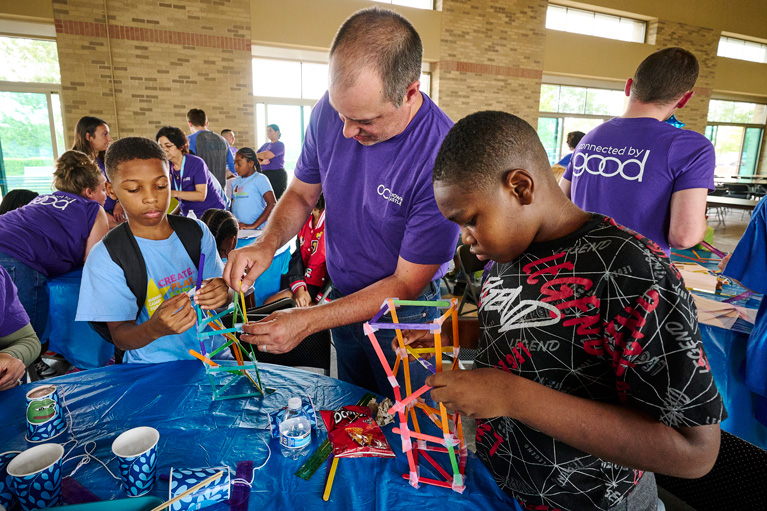
Crown Castle has partnered with over 60 Boys & Girls Clubs across the country by investing in STEM programs for youth and volunteer opportunities for staff. During the summer, Crown Castle employees visited Clubs to do hands-on STEM activities with the Club members.

“It’s so great to see kids light up with interest in STEM. As they explore more, they build their own STEM confidence, which will open their eyes to careers – and ways they can leave their mark on the world – down the road,” said West.
Together, Boys & Girls Clubs of America and Crown Castle are preparing more young people with the skillsets and experiences to thrive in 21st-Century STEM careers.
Great Futures in STEM Start Here
Through afterschool programs at Boys & Girls Clubs, kids and teens can explore their STEM interests, develop essential job skills and apply their skills to real-world experiences. Find a Club near you to help set the stage for your child’s success in college, career and life.


